On “On Narcissism - An Introduction”: A Re-Introduction to the Virtual Age
As much as I love a good meme as much as the next chronically online person, I blame the internet. How did this come to pass? Gosh we had it all. We started with 2-minute flash videos of a four-frame loop of an anime girl spinning a leek set to Finnish scat singing and now we are witnessing the collapse of the great American experiment on Tiktok. To help answer the core psychological reason for our inability to use the internet effectively, I want to invoke the great-grandfather of talk therapy, Sigmund Freud.
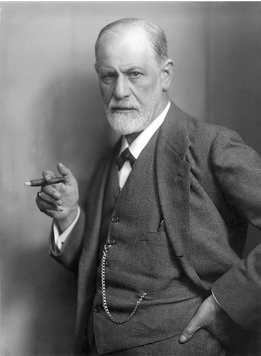
“MY cigar is not a phallic object, I swear.” - Freud, probably
I know he’s a controversial figure. He held intensely misogynist views and tried to pass off pseudoscience as biology. Even still, I am of the belief that if the intellectual community adjusted the frame slightly and just called him a qualitative researcher then Freud would be considered a genius in the history of science. In true ground theory style, he interviewed and then coded the words of people with mental illnesses - an untouchable caste of people in 19th- century Europe, I might add - to construct an overarching formulation of how we think. Yes, some of his conceptions are laughable today like penis envy and the Oedipal complex (says a lot about what was occupying Freud himself, eh?). However, I want to highlight some ideas he presents in his essay “On Narcissism” (1924) and show their strange salience to our contemporary social plight.
To begin, let us re-familiarize ourselves with Narcissus from the myth of Echo and Narcissus. In Ovid’s Metamorphosis, there is a story of a beautiful hunter, Narcissus, who was punished by the Greek goddess of revenge, Nemesis, with a curse of unrequited love after spurning a wood nymph named Echo (her own story is outside the scope of this paper). Narcissus fell in love with his own reflection in a pool of water. He did not recognize the reflection as himself. He reached out to his reflection to try to caress it, but then the image dissolved as his hand dipped in the water. Narcissus then figures that sitting and watching the reflection was his only way to “love” it. He ended up wasting away and dying at that pool, and the gods replaced his corpse with six-petaled flowers named narcissuses.

“Hey, uhh… water you doin’ tonight?”
Psychoanalytic writers including Freud were quick to use that character as the personification for the bizarre psychic blindness seen in tackling the neuroses of the patients head-on. For example, try telling someone who is waxing grandiose about their cryptocurrency wallet that they are living in a technological dream world. The inevitable negative reaction has been characterized by Sigmund’s daughter, Anna Freud, as “defenses.” What the therapists were running into was the self’s immune system, so to speak. When a foreign concept tries to enter our minds, our narcissistic tendencies activate, our egos inflate, and the invader is turned away. As such, Freud’s definition of narcissism is less of an attack on big-headed bigots, but more of a comment on how all humans manage their self-esteem.
To conceptualize a universal human response, Freud, a medical doctor by training, uses the clinical rationale of comparing the body in health with the body when “diseased.” He synthesizes observations of normal toddlerhood as well as adults with schizophrenia and OCD. He writes:
“[In each of those populations above], we find characteristics which… might be put down to megalomania: an over-estimation of the power of their wishes and mental acts, the ‘omnipotence of thoughts…’ Thus we form the idea of there being an original libidinal cathexis of the ego, from which some is later given off to objects… much as the body of an amoeba is related to the pseudopodia which it puts out.”
Reading Freud is like listening to your drunk friend at a nightclub trying to explain their PhD thesis on 17th-century European whaling vessels, so allow me to paraphrase in modern English.
The specific instances of “omnipotence of thoughts” can be seen readily in your normal child. Imagine back when you were a kid and held the strange belief that if you “step on a crack you break your momma’s back,” or if you speak the incantation, something bad will happen to your enemies; or if you don the cape and wield the wand you can perform magic.

“Libido cathexis!” “That’s it! Straight to the headmaster’s with you!”
As adults, we lose that type of magical thinking, but Freud is insightful in linking the thoughts of people with OCD to this self-aggrandizement. For instance, there is a common thought of “if I don’t wash my hands 50 times when I enter the home, my father will get cancer.” The logical leap seems magical, but then the person feels so compelled by anxiety, they wash their hands 50 times. Similarly, we can see in people with severe schizophrenia that they believe their thoughts are open for the world to read and use for nefarious purposes (i.e. “megalomania”). In all instances, the self is artificially inflated.
Moving on to the thrust of Freud’s definition of narcissism, we have to parse out the phrase: “original libidinal cathexis.”
First off, “original” in this case means “pertaining to the origin.” Freud is commenting on how narcissism is a part of normal human psychological development. He attributes this stage to toddlerhood, the time when we start to separate the survival instinct from simply pleasuring oneself. The prime example is thumb-sucking: while not necessary for survival, it is reminiscent of the pleasure of feeding, and so the toddler is driven to do so to self-soothe.
Thus, “libido,” Freudianly-speaking, is not just about sex drive. Libido is a quantity of the mind’s energy to pursue any kind of bodily enjoyment, big or small. Many scientists hold objections over this because there has not been any correlation with actual biology. (Freud, in some of his wackier private correspondence with other doctors, postulated some connection between one’s libido levels and the amount of fluid and pressure in neurons, which had been discovered contemporaneously.) However, the concept of the libido is easily felt. Who hasn’t conducted a vibe check on a Saturday night? Who hasn’t felt emotionally drained after watching a really good movie? Who hasn’t stopped texting a potential date because the interactions started to get too complicated? These are all situations in which we experience the libido, the dynamic energy Freud touts as a universal component of the human mind.
And who knows? Maybe in the future with the advances in technology, we could find some sort of correlation.
Okay, but what about this word, “cathexis?” Since Freud wrote in German, the English translator unconsciously (or consciously, I can see it) went a little too hard on the arcane language. He picked a Greek term that's too Greek for me to understand, so let’s return to German. The word Freud uses is “besetzung”, the gerund of the verb “besetzen,” which means “to fill” as in a role in a play or “to staff” a job opening. It also has a military usage, meaning “to occupy” territory. The overall sense of the word is the act of investing something for something in return.
A better illustration of “cathexis” is the metaphor Freud uses of a single-celled organism called an amoeba. Amoebae explore their world by sticking out little protrusions of themselves called “pseudopods” (fake feet in Greek). They do this to find food, look for mates, and generally sense the environment. There's a cost to doing so, though, since they could get snapped up by a predator or some environmental hazard like pH or temperature change could kill them. As such, the amoeba is making a calculated risk by extending only a small part of itself, and at the detection of danger, the little amoeba sucks the pseudopod back into its body.
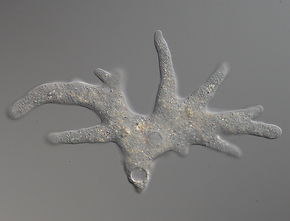
This is your brain on Freud.
So you can picture how Freud thinks we exert our emotional efforts to find pleasure. When we feel bold and thirsty, we reach out with a psychic tendril to something in our mental space: “Maybe I should call her…” or “Mmm… Taco Bell.” This impulse is what drives our body to follow. Then, there are the times we feel less capable and/or are satiated and retract the tendril so as to conserve energy. Think of when you’re down with the flu and you become cranky with others when they come to you for emotional support.
The indirect object of that Freud quote above is about “objects.” These are psychological objects, which Freud thought of as our mental reconstructions of important figures in our life. Our paternal object and our maternal object perform different functions in our minds, and as object relations theorists posit, these mental reconstructions get projected into our real world much more often than we would like to admit.
So adding it all together, Freud calls narcissism an “original libidinal cathexis,” which then goes toward “objects.” He means that at one point in our childhood, we learned how to invest a finite amount of mental energy into ourselves or other people in order to procure bodily pleasure.
Freud doesn’t use this word, but he is essentially calling narcissism an economy of pleasure. With a limited amount of libido to invest, we are constantly strategizing whether to work toward pleasuring ourselves or pleasuring others in hopes that they pleasure us back. However, the more we invest into others, the less we have to invest in ourselves. Ah, stay classy, Freud; writing that out made me seem like a total sociopath.
Hang on, Dr. Ying, that’s downright rude. You’re saying all of humanity, including me, your astute reader, is playing out some zero-sum game of hedonism?
Well, yes and no. I do agree with Freud’s concept of narcissism as a uniting factor of human psychology across races, ethnicities, sexualities, anything that differentiates us. But, I don’t think hedonism is the game we’re playing because “we live in a society.”

We live in a society.
Freud writes later in “On Narcissism”:
“Observation of normal adults shows that their former megalomania has been damped down and that the psychical characteristics from which we inferred their infantile narcissism have been effaced… We have learnt that libidinal instinctual impulses undergo the vicissitude of pathogenic repression if they come into conflict with the subject’s cultural and ethical ideas… Repression… proceeds from the self-respect of the ego… [thus] we can say that… man has set up an ideal in himself by which he measures his actual ego, [and] this ideal ego is now the target of the self-love which was enjoyed in childhood…”
Translation: as we age and come to understand society's rules, we go about satisfying ourselves in a different way than when we did so as an infant or toddler. Instead of giving into visceral urges outright, we construct a socially-acceptable ideal ego (i.e. ideal self) to strive for. In that manner, we derive pleasure by investing emotionally in that projection of pure perfection.
The ideal self is what Freud will eventually call the superego in his later writings. In essence, each person has a consolidation of all the “shoulds” and “shouldn’ts” imparted on them from authority figures like their parents and social voices as well. Understandably, each person would then have a unique ideal self as a psychological object, since everyone’s phenomenological experience of what’s ideal is different.
It’s important to note that this narcissistic drive is not something we do all the time. In fact, most of the time we are just living our mundane lives. When we “regress” due to external stressors - or if we never “progressed” in our psychological development - we may return to the time when we had the grandiose magical thinking of our childhood and believe that if we gratified the narcissistic impulses, then we can make everything right in the real world. The classic example is that of a mid-life crisis. While one’s life is destabilizing, one may choose to feed the notion of a past youthful vigor by chasing women or buying expensive clothes or working out at the detriment of one’s life responsibilities.

Therapy is cheaper. I promise.
The worst part? Gratifying the narcissistic drive is like peeing your pants while out in the cold snow. You feel warm for a bit, but then you really start to freeze your crotch off. Every time we go through the narcissistic process, we actually fail to achieve the omnipotent fantasy. (Buying that yacht doesn’t make one 25 again.) And the magical psychic blindness like in the Narcissus and Echo myth works to protect us from negative feelings. We call it splitting. The mind’s idea of fantasy and reality become separated from one another through the strength of the denial that one can affect the other.
At a certain point, the damage to reality gets to a point where we’ll have to address it (like a divorce or something). What happens then? Well, we feel anger, guilt, and shame. The superego is our brain’s police force, judge, and executioner. There is an element of persecution and censorship that society inculcates into each person, perhaps a harsh reminder that everything in the world is indeed finite, and that infantile wishes are unsustainable. I often see this manifest as “negative self-talk” in my patients. Sometimes it can get so distinctive there’s an authority figure’s voice involved. Most of the time though, it is self-inflicted: these are our internal objects, after all.
There are of course less-than-obvious but just-as-detrimental examples of pathological narcissism than the mid-life crisis. The Fairy Tale of Perfectionism is one. Making an external factor one’s entire personality (e.g. career, demographic, or hobby) can be pathological narcissism. Paradoxically, the insistence of staying in the sick role can also be pathological narcissism: the ideal self is simply one that is much different from what the majority of people would say is an ideal self. Anytime someone is investing heavily in a grandiose fantasy to the point in which their real life is ruined, it’s pathological narcissism.
Aaaaaaand, we’ve returned to the myth of Narcissus, the man who loved a reflection of himself to the point of dying. The scariest part to me is that he couldn’t recognize the image as a reflection of himself. On one hand, he’s stunned by the beauty and simultaneously unable to use that energy to feed himself. In my experience, good therapy hurts because it helps us realize we are the ones depriving ourselves as we indulge in an unattainable ideal. Then, we return to reality, a bit deflated, but at least feet-on-the-ground.
To sum up, Freud’s narcissism is a human developmental stage that pops up again when we regress. We have grandiose fantasies into which we invest our emotional energy at the cost of splitting our sense of self into an idealized version and the emaciated real version. At the same time, the ideal self or superego is judging us. It is making us feel guilt and shame that we are not doing the impossible, which then may lead to another regression. And the cycle continues.
A harrowing thought you may be having is “gosh, how do I know this isn’t happening to me?” Well, one way to find out is to go to therapy. Not to give everyone paranoia, but the people around you may not be giving you the right feedback about your mental state. A therapist is technically a neutral, third-party opinion on your actions, thoughts, and feelings. Another thing to note about therapy is that in digesting this blog post, you have intellectually engaged with narcissism, which isn’t the same as understanding something at a visceral level. If giving this lecture would cure someone’s narcissism, I would be out of a job. The way to process narcissism is to go through the hard feelings with someone you trust.
As I set out to write on this topic, I had underestimated how much I had to explain Freud’s original narcissism theory. By now, the connection to modern techo-sociological pillars like selfies, social media, and advertisements is probably looming in your minds, but I believe that shall be for the next blog post. The bolded terms will be the subject of the next blog post on how media, technology, and capitalism have hijacked our inner narcissistic tendencies to create the flaming, post-internet isolation-fest of today.
